Imagine this: you’ve packed the perfect wardrobe for your Miami escape or Toronto ski weekend. The chauffeur drops you at the FBO, the crew greets you with champagne… and then the pilot says three words that ruin everything: “It won’t fit.”
At Charter Wind we’ve seen it dozens of times — and we’ve solved it every single time. This 2026 guide gives you the exact cubic footage, real-world examples, and insider tricks so you never get that sinking feeling on the tarmac again.
The Golden Rule: Soft Luggage Wins Every Time
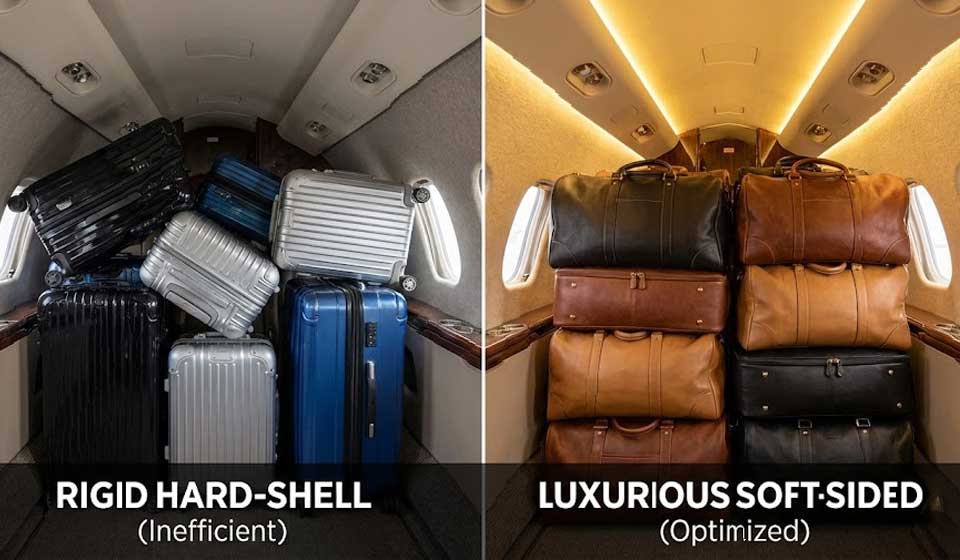
When planning your packing list, remember: volume matters more than weight. Private jet cargo holds are curved and tapered, so soft-sided luggage always wins. Hard-shell roller bags create dead space; soft duffels, leather weekenders, and garment bags mold perfectly and let you bring 30–40% more.
Rule of thumb: One standard carry-on roller + one personal item per passenger is safe on any jet. Anything beyond that depends on the aircraft class below.
Private Jet Luggage Capacity by Aircraft Size (2026 Updated)
One standard large suitcase ≈ 4–5 cubic feet. Here’s exactly what fits on every category:
| Aircraft Category | Average Luggage Capacity (Cubic Feet) | Estimated Bag Count (soft-sided) | Ideal For | In-Flight Access? | Real Example Models |
|---|---|---|---|---|---|
| Very Light Jets (VLJ) | 40–60 | 3–5 medium bags | Weekend getaways, short domestic hops | No | Phenom 100, Citation Mustang, PC-12 |
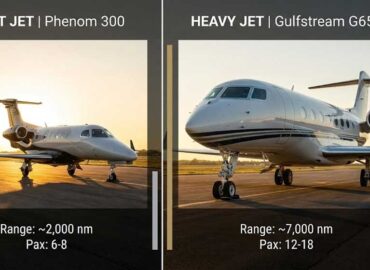
| Light Jets | 50–70 | 5–7 medium bags | Regional business trips, light golf gear | No | Citation CJ3, Phenom 300, Hawker 400XP |
| Midsize Jets | 60–90 | 7–9 large bags | Cross-country flights, moderate luggage | Usually | Citation Excel, Learjet 60 |
| Super Midsize | 90–110 | 10–12 large bags | Transcontinental travel, ski equipment | Yes | Challenger 350, Citation X |
| Heavy & Ultra-Long-Range | 130–195+ | 15–20+ large bags | International flights, extensive wardrobes, sports teams | Yes | Gulfstream G650, Global 6000, Falcon 7X |
Will My Luggage Be Accessible During the Flight?
This is one of the most common questions we receive. The answer depends entirely on the aircraft model:
- In-Flight Accessible Baggage: Many Midsize, Super Midsize, and Heavy Jets (like the Gulfstream G650 or Challenger series) feature internal compartments. Your flight attendant can hand you a fresh suit, laptop, or change of clothes mid-flight.
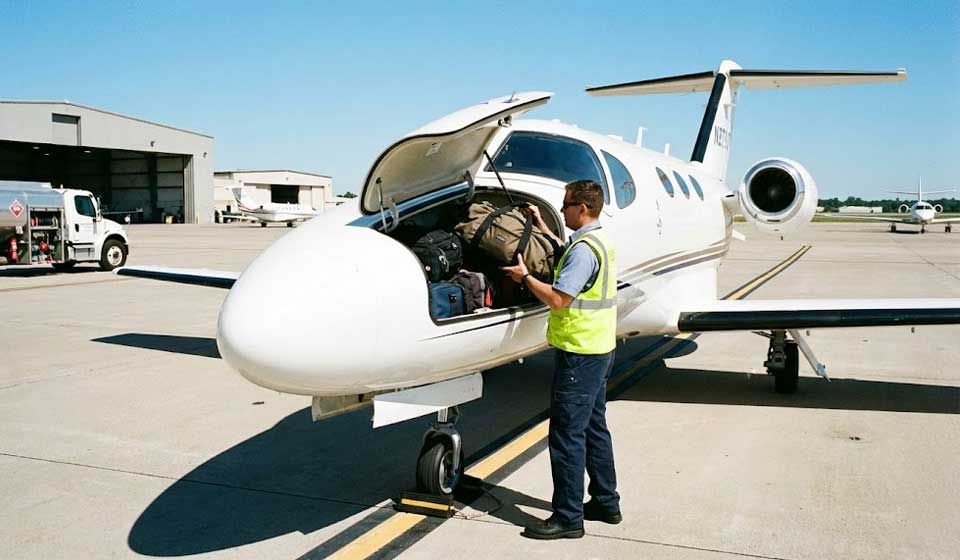
- External Baggage Holds: Most Light Jets and VLJs store luggage in the nose or tail. Once the doors are sealed before takeoff, you won’t have access until landing. Always keep medications, electronics, and passports in a small cabin tote.
Flying with Oversized Items: Skis, Golf Clubs, and Strollers
Not all cubic footage is created equal. A Light Jet might have 60 cubic feet total, but a 6-foot pair of skis simply won’t fit through the cargo door.
If you’re traveling with:
- Golf Clubs & Skis: Upgrade to at least a Midsize or Super Midsize jet.
- Strollers & Wheelchairs: Ensure they collapse flat. Tell us in advance so we can match an aircraft with an oversized cargo door.
- Toronto YYZ Winter Departures: Heavy coats, ski boots, and extra layers eat serious volume — always mention them when requesting a quote.
Pro Tips That Actually Matter
- Golf clubs & skis: Need at least a Midsize jet. Light jets often require special “pass-through” doors.
- Strollers & wheelchairs: Must collapse flat; rigid models need Heavy jets.
- Toronto departures (YYZ): Winter coats and ski boots add serious volume — always tell us in advance.
- Empty-leg flights: These jets are pre-loaded with weight & balance. Extra bags can bump you to a larger aircraft at no extra cost.
Special Items That Trip Everyone Up
Skis, snowboards, golf bags, and large strollers are the most common “surprises.” Book early and send us photos — we’ll match you to the right jet the first time.

What Happens If Your Bags Don’t Fit?
Safety first. Overweight or unsecured luggage never leaves the ground. But with Charter Wind you have three easy escapes:
- Send a quick photo of your pile before departure.
- Upgrade to the next class (often cheaper than overnight shipping).
- Use our empty-leg inventory — same aircraft, 30–75% less, perfect baggage fit guaranteed.
Frequently Asked Questions (FAQ)
How much luggage can you take on a private jet?
It ranges from 3–5 bags on a Very Light Jet (approx. 50 cubic feet) to over 20 large suitcases on a Heavy Jet (up to 195 cubic feet). Soft-sided duffels are highly recommended to maximize space.
Do private jets weigh your luggage?
Yes. The pilot calculates exact weight and balance before takeoff. If the total (passengers + fuel + luggage) exceeds maximum takeoff weight, bags may need to be left behind.
Can I bring liquids over 3.4 ounces on a private jet?
Absolutely. One of the greatest perks of private aviation is bypassing commercial liquid limits — full-sized shampoos, fine wines, and premium spirits are welcome.
What happens if my bags don’t fit?
Safety first — nothing flies unsecured. With Charter Wind you have three easy solutions: send a photo, upgrade aircraft, or switch to an empty-leg option with perfect fit guaranteed.
Ready to Pack Without Limits?
Stop guessing. Tell us your group size, dates, and luggage details and we’ll return a custom quote with the exact aircraft that fits everything — including your golf clubs or ski boots.
Get Your Personalised Quote in 60 Seconds